

The Death Of Beauty
“The spectacle is not a collection of images, but a social relation among people mediated by images”
-Debord
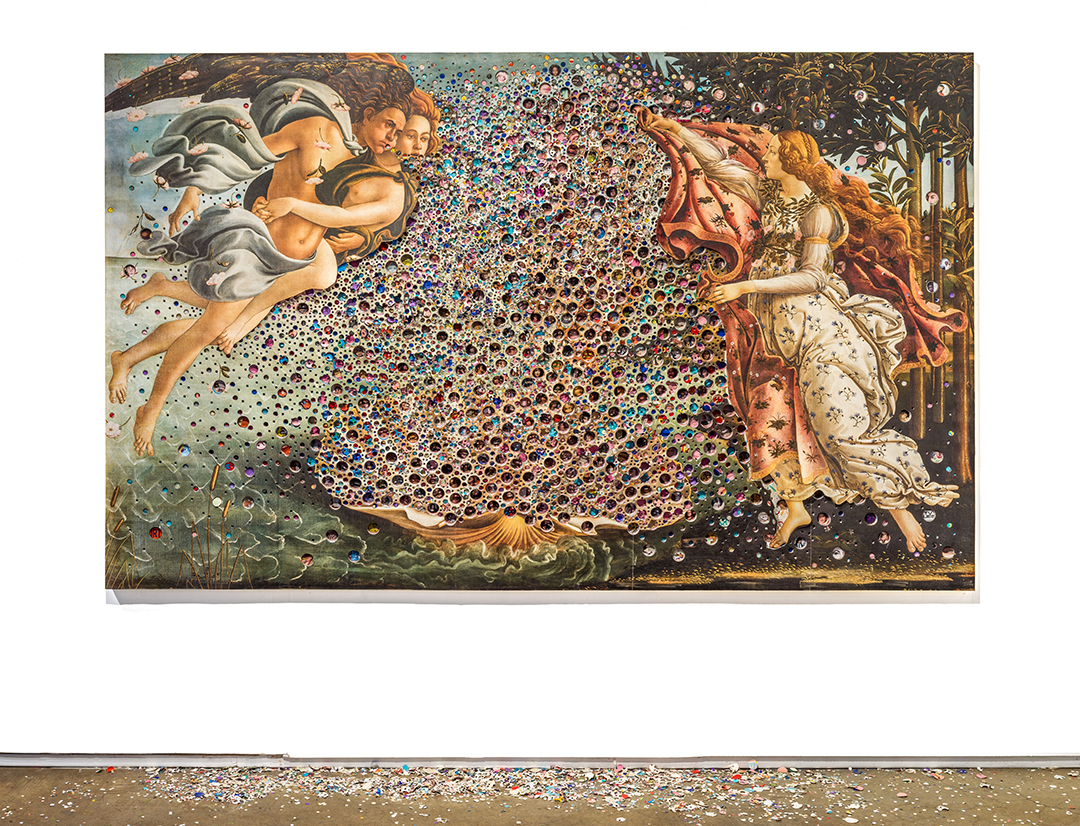 The Death Of Venus – 96×59 – Wallpaper mural, birthday gift wrapping paper, magazine images
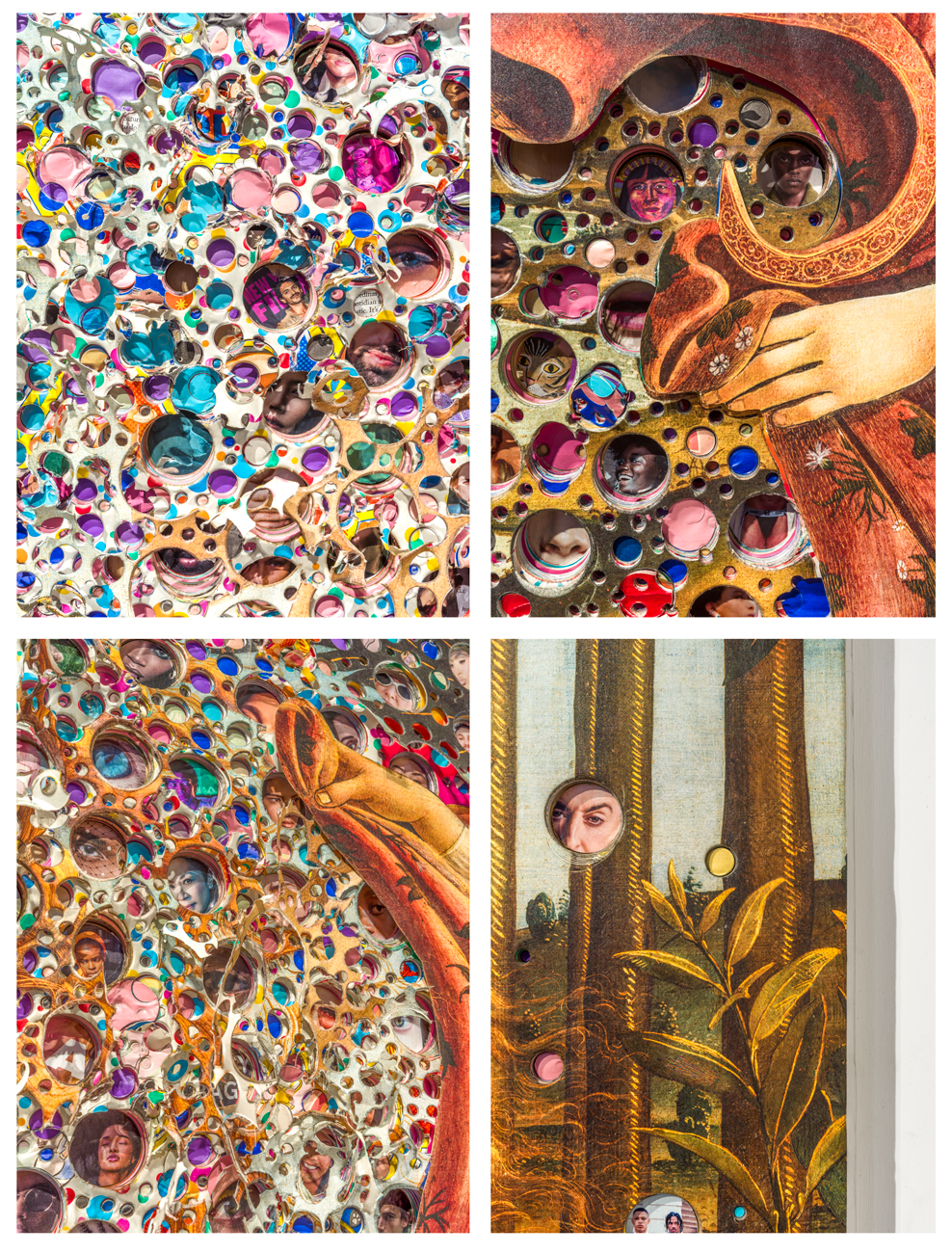 The Death Of Venus – closeups
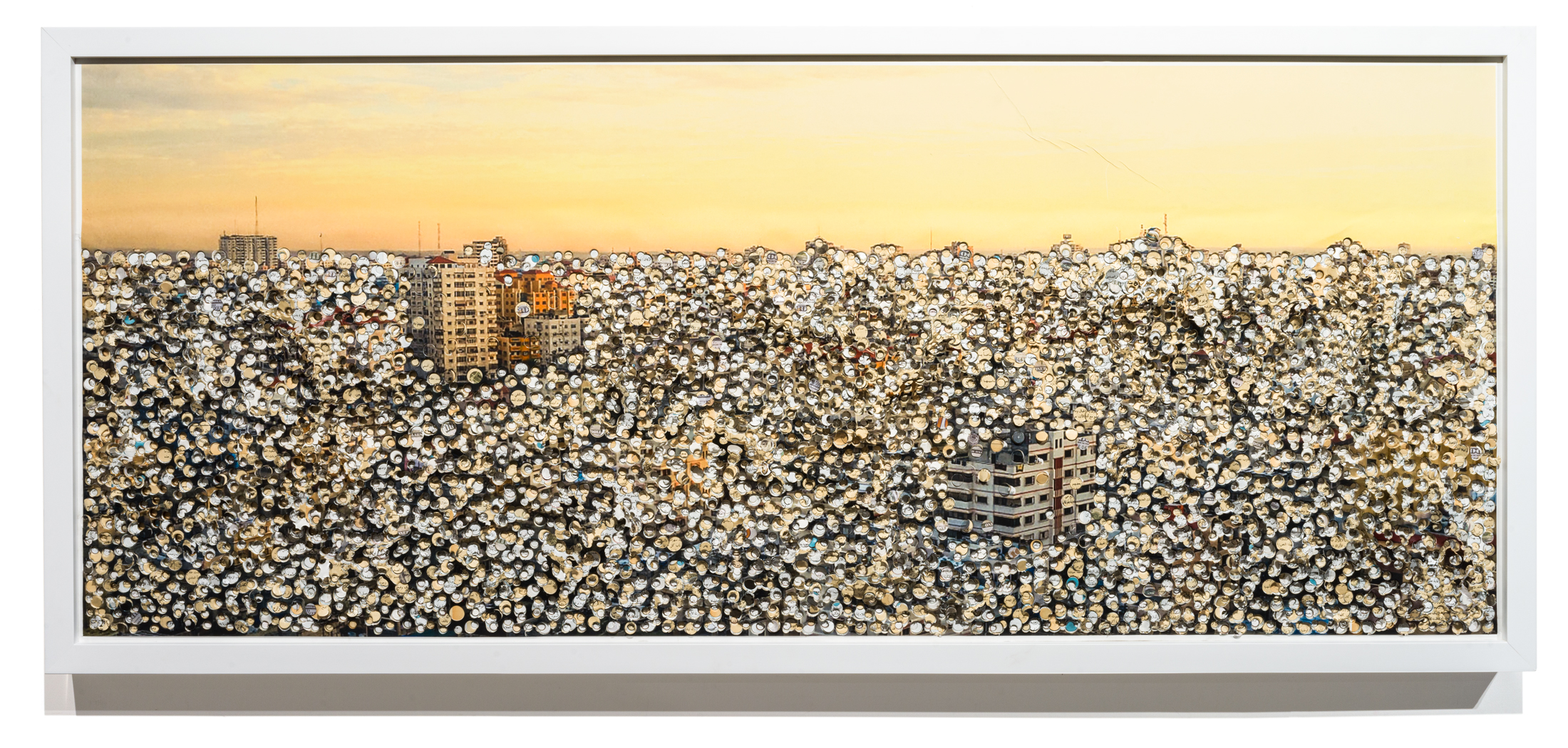 Gaza City – 60×24 -Archival pigment print of stock photography, Arabic texts on peace and prosperity in the Middle East, Money
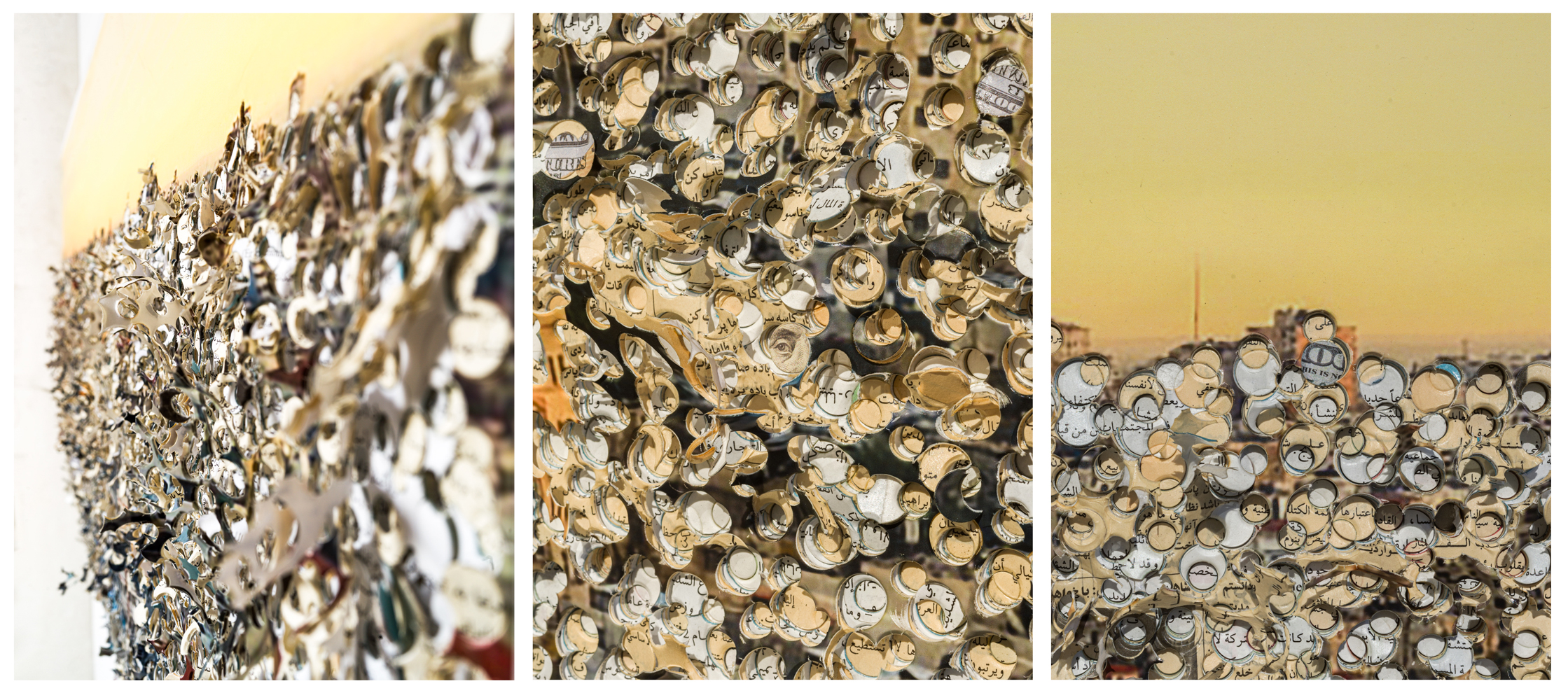 Gaza City – closeups
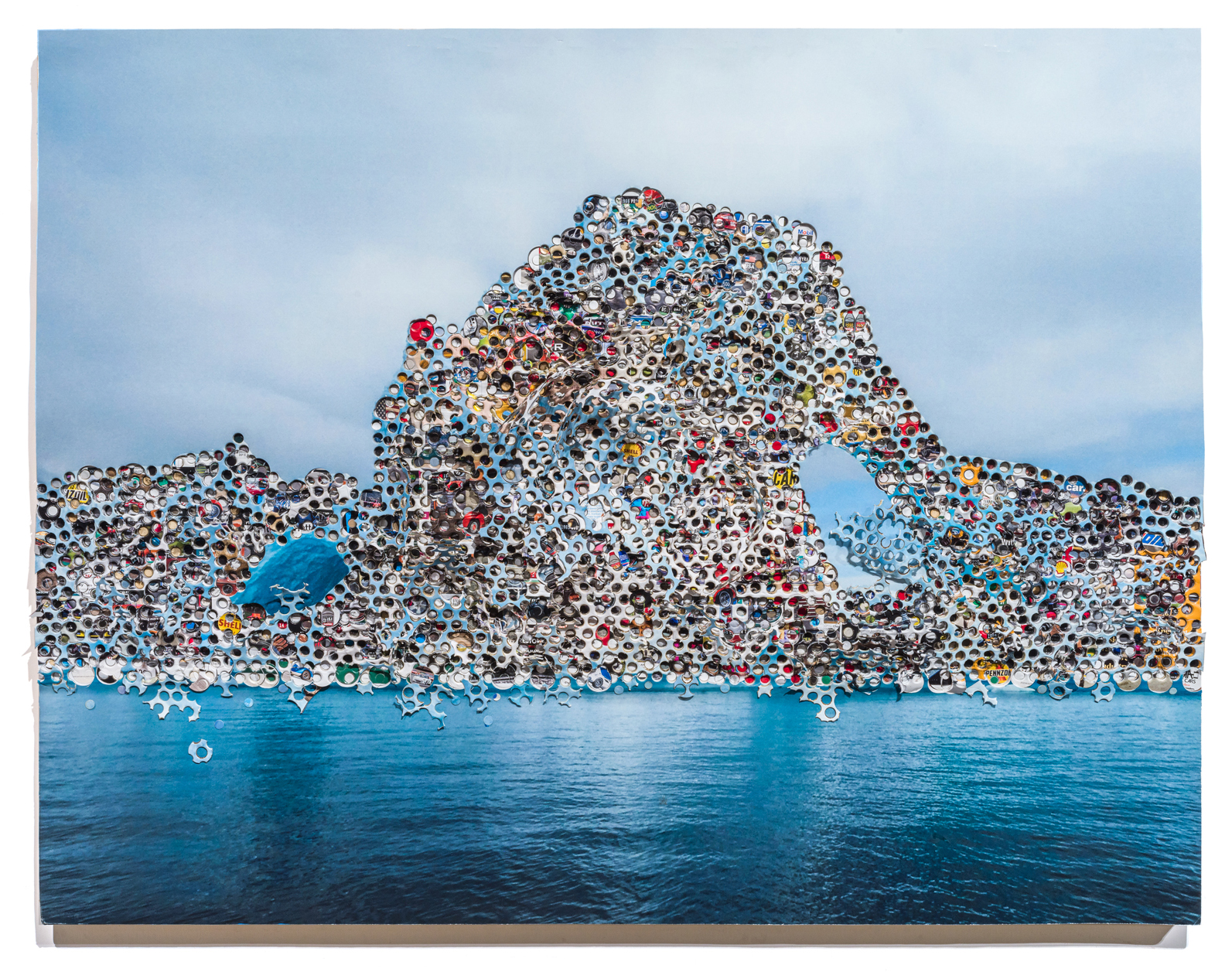 Iceberg – 48×37 – archival pigment print of stock photography and automotive magazines
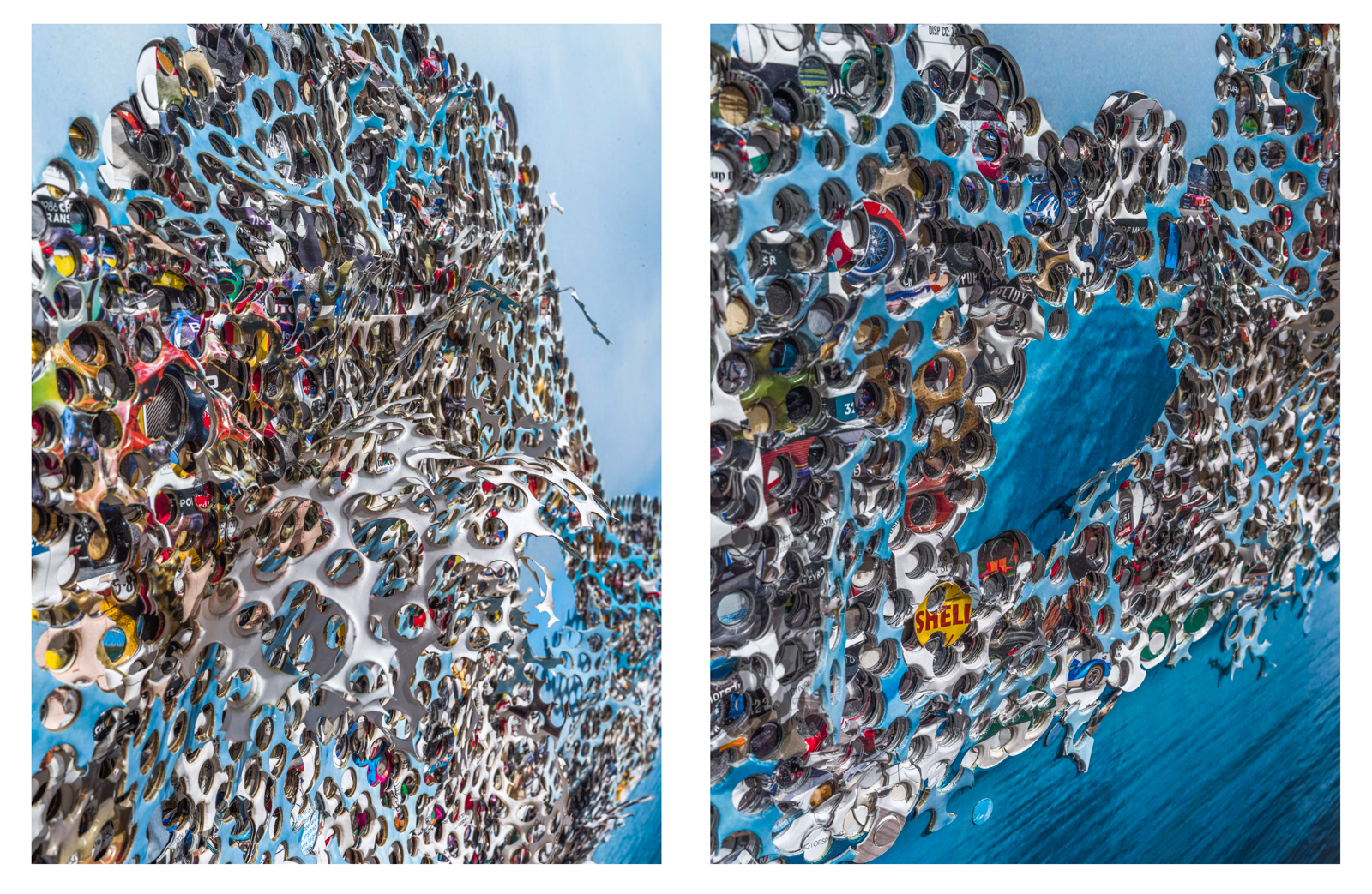 Iceberg – close ups
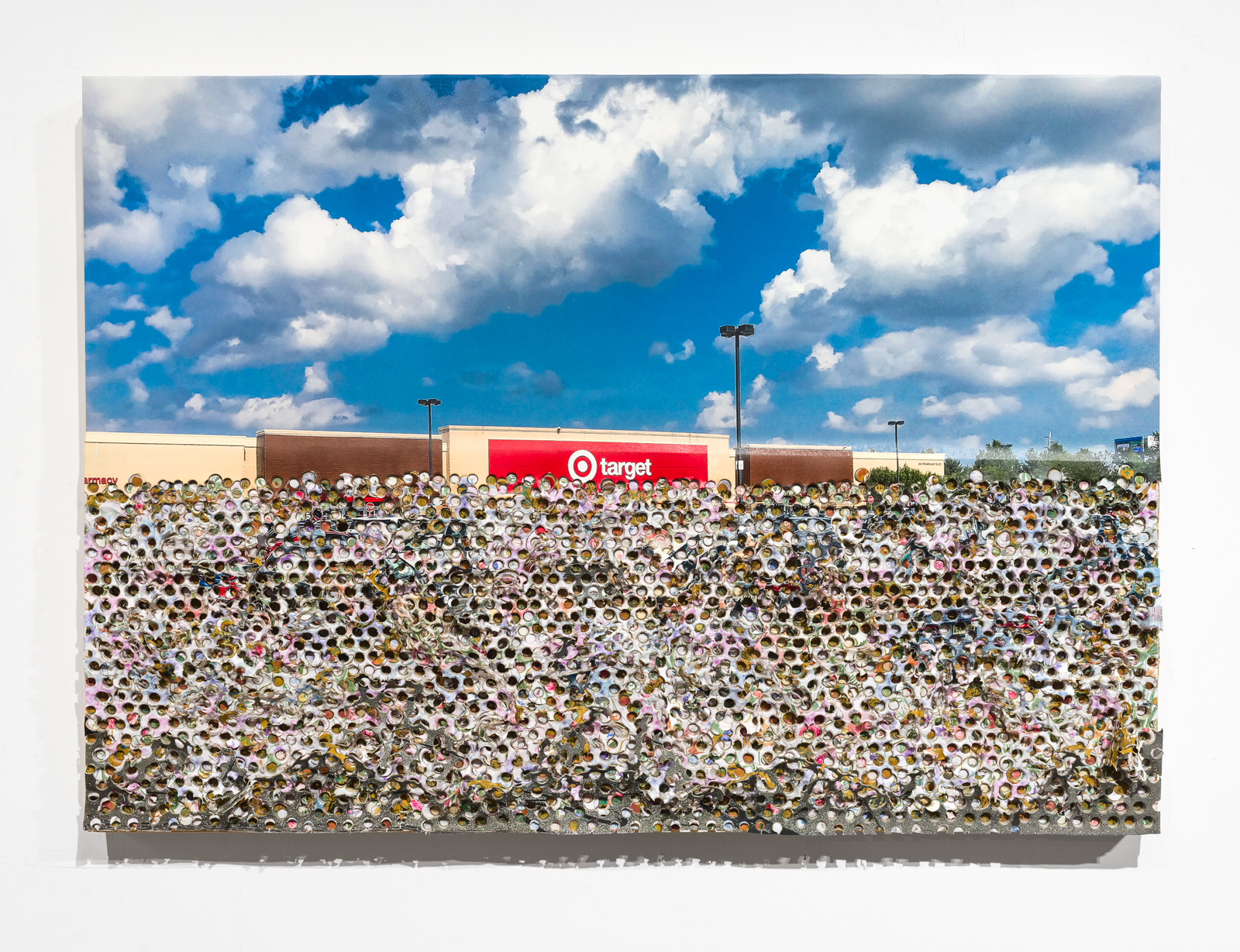 Target – 35×25 – archival pigment print of stock photography and floral wrapping papers
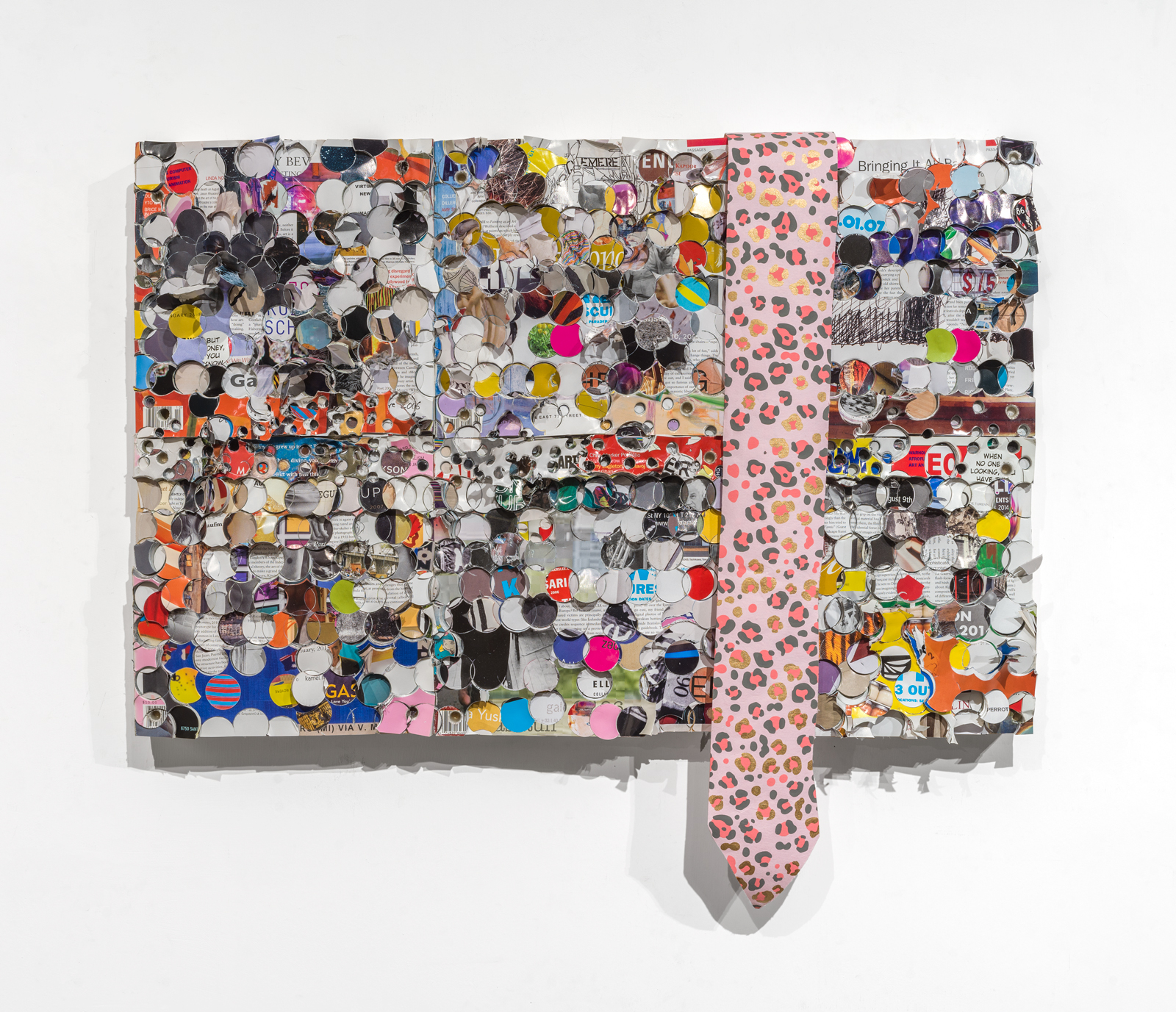 Artforum – 32×21 – Artforum magazines and pink leopard wallpaper
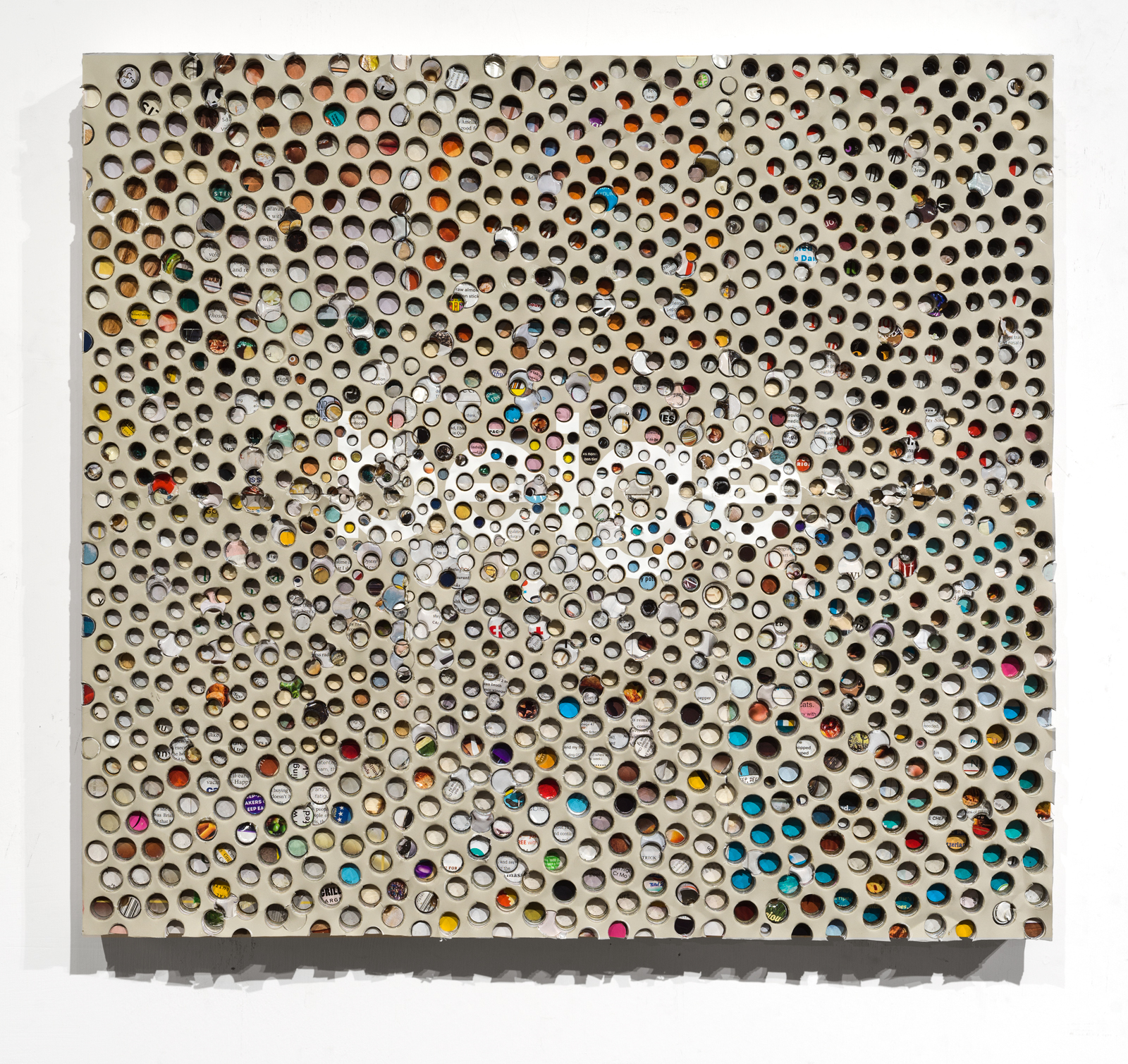 Beige – 24×22 -Archival pigment print and Artforum magazines
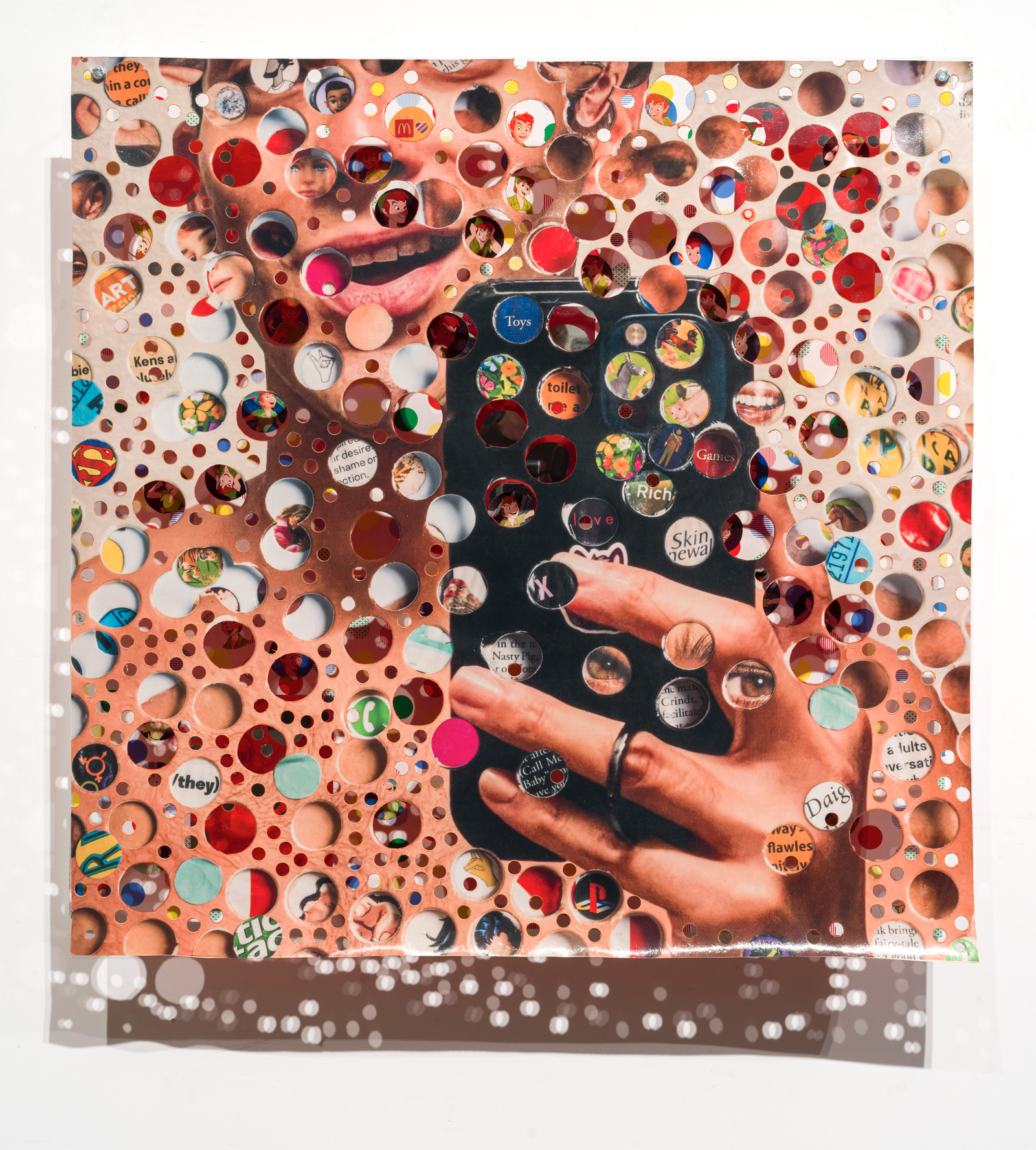 Never Never Land – 35×36 – Archival pigment print on poly fabric, mirrors, Peter Pan color prints
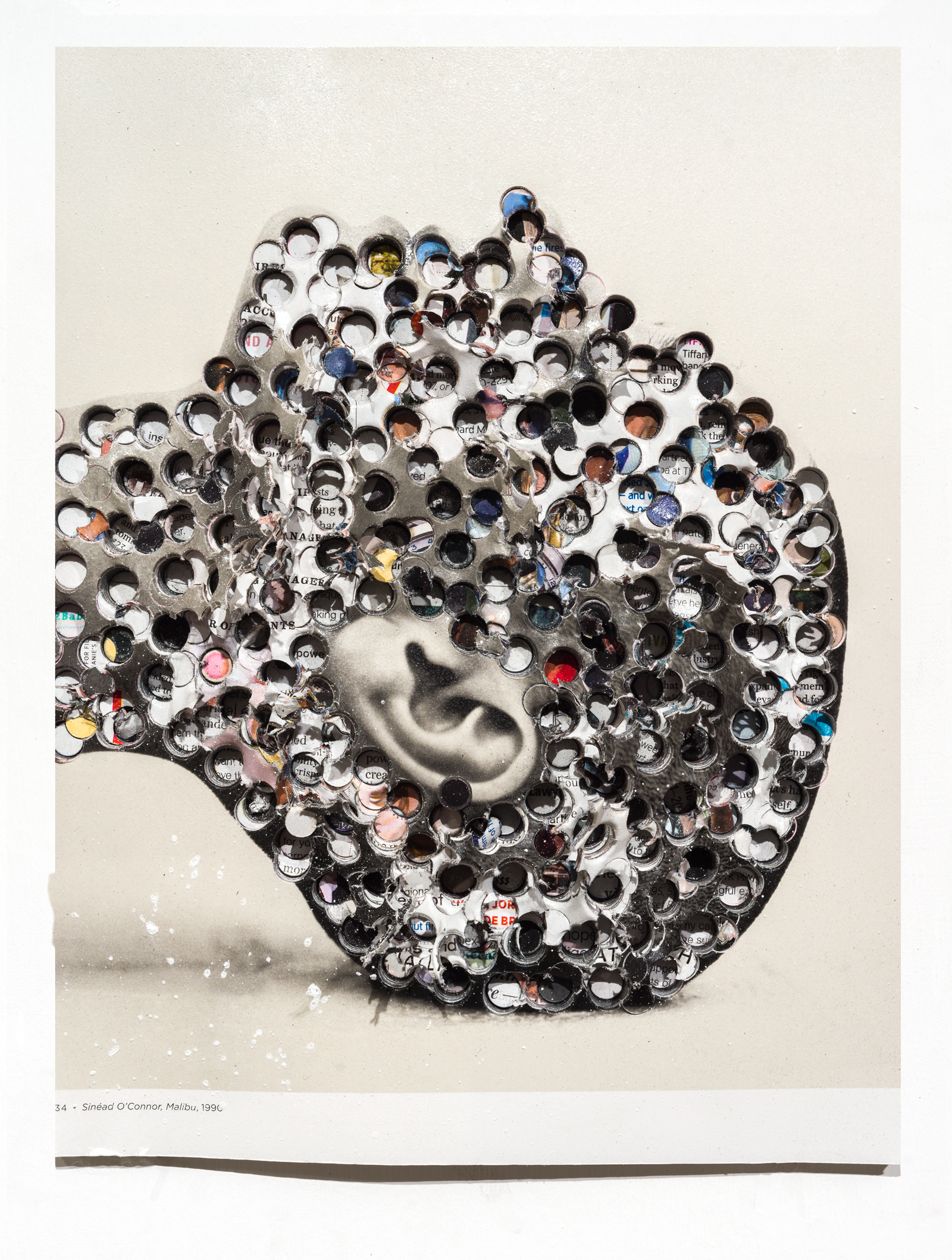 Sinead O’Connor – 8×10 – Herb Ritts photograph and Los Angeles magazine
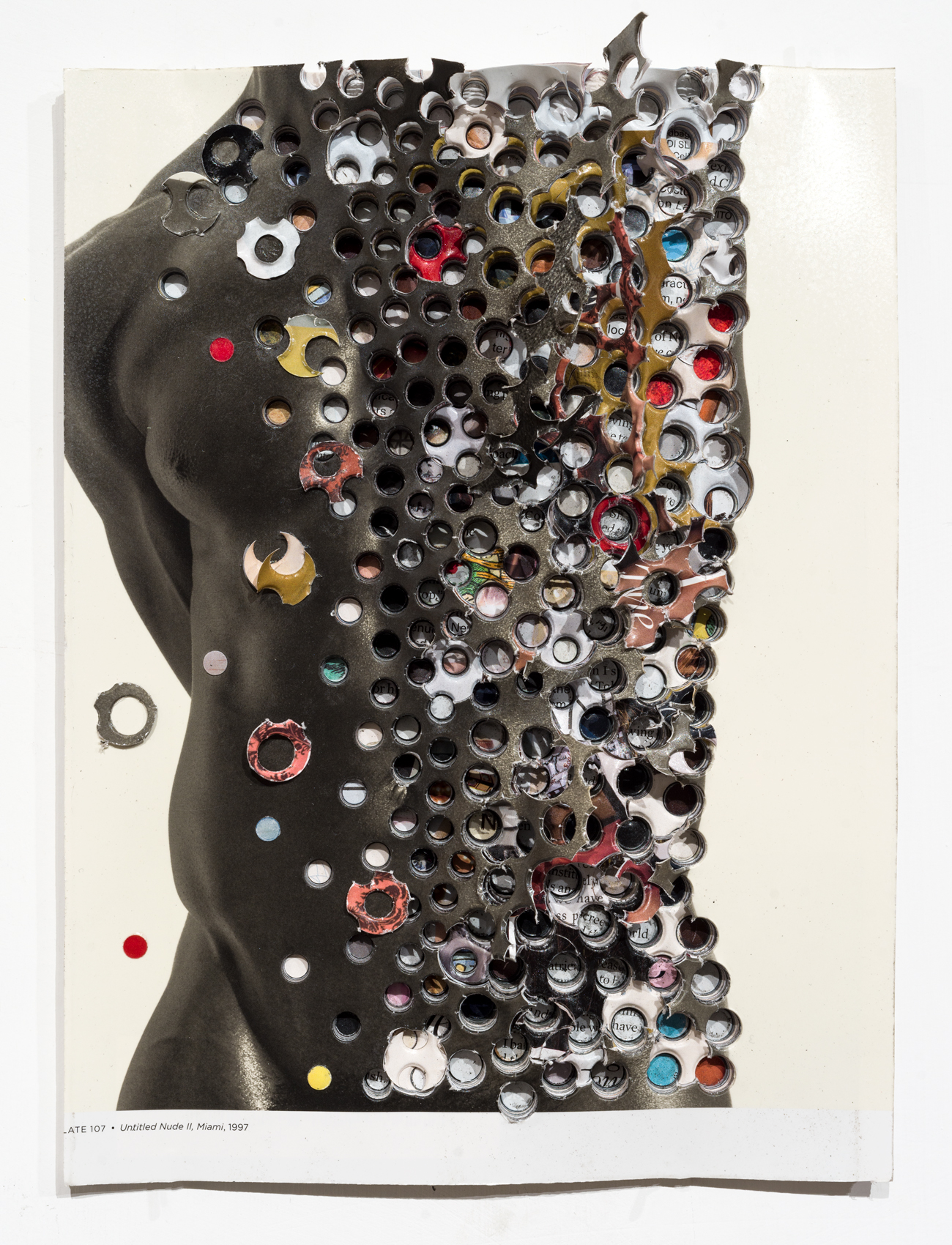 Torso – 8×10 -Herb Ritts photograph and Out magazine
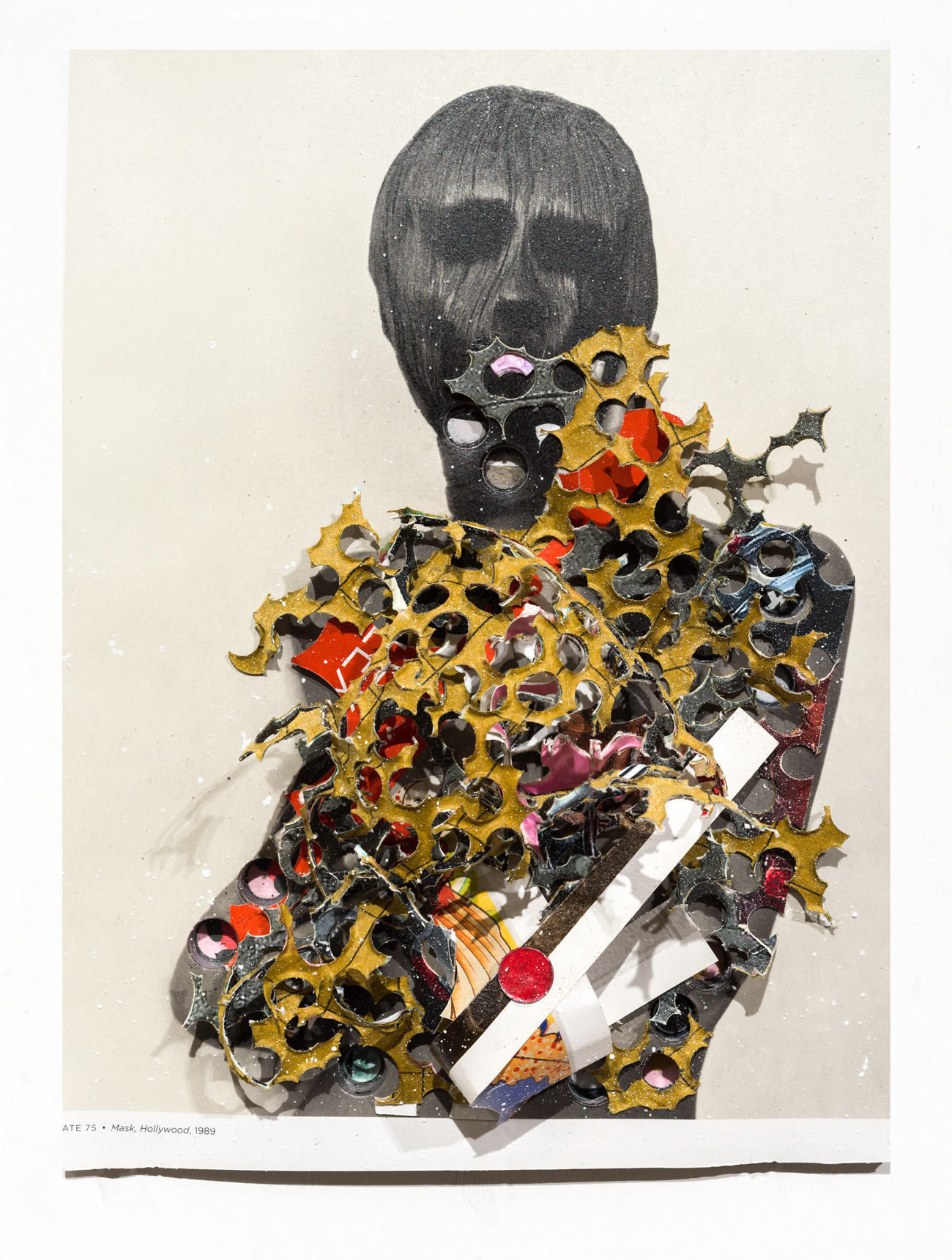 Mask – 8×10 – Herb Ritts photograph and Out magazine
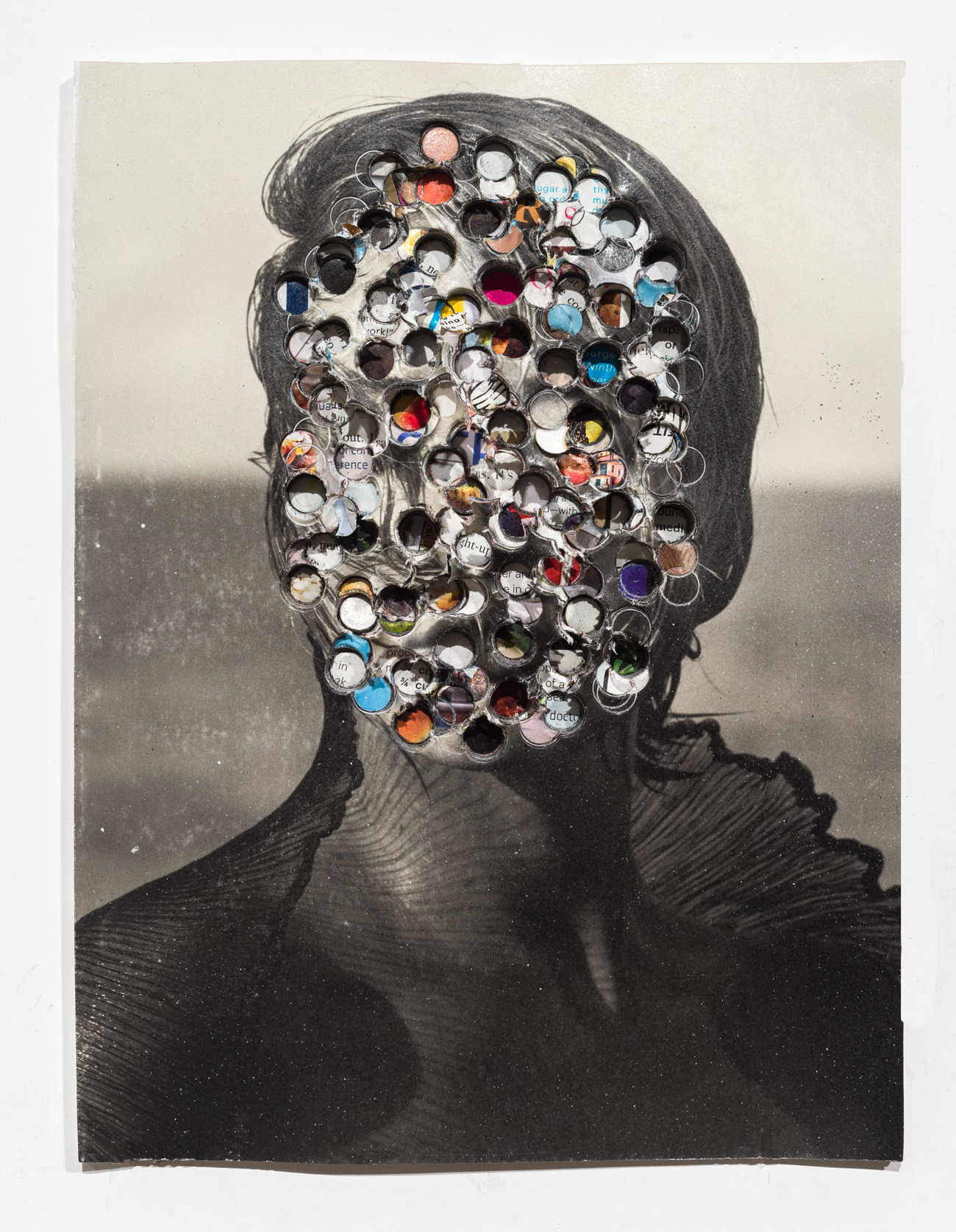 Tatjana – 8×10 – Herb Ritts photograph and Vogue magazine
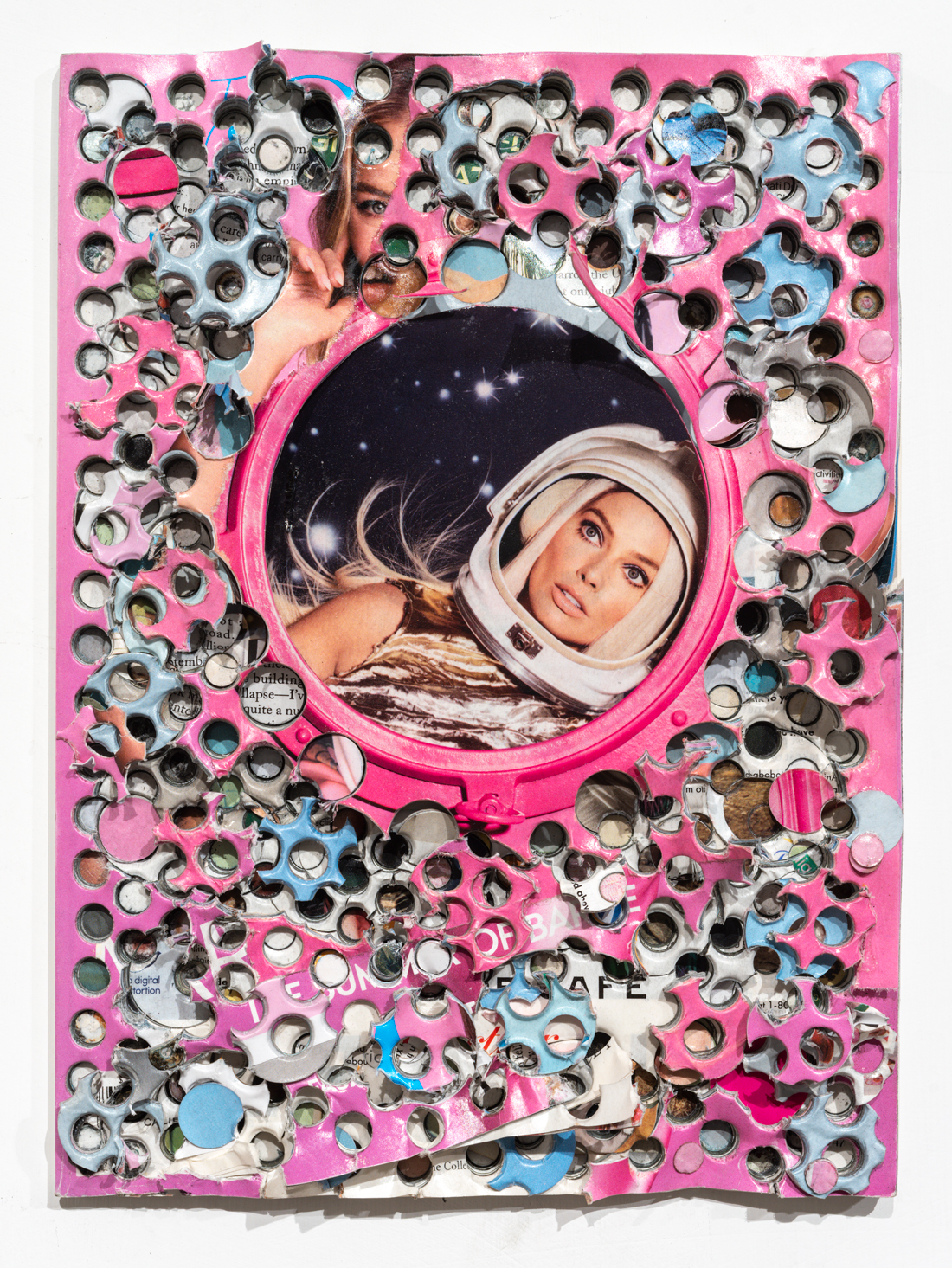 Barbie – 8.5×11 – Vogue magazine
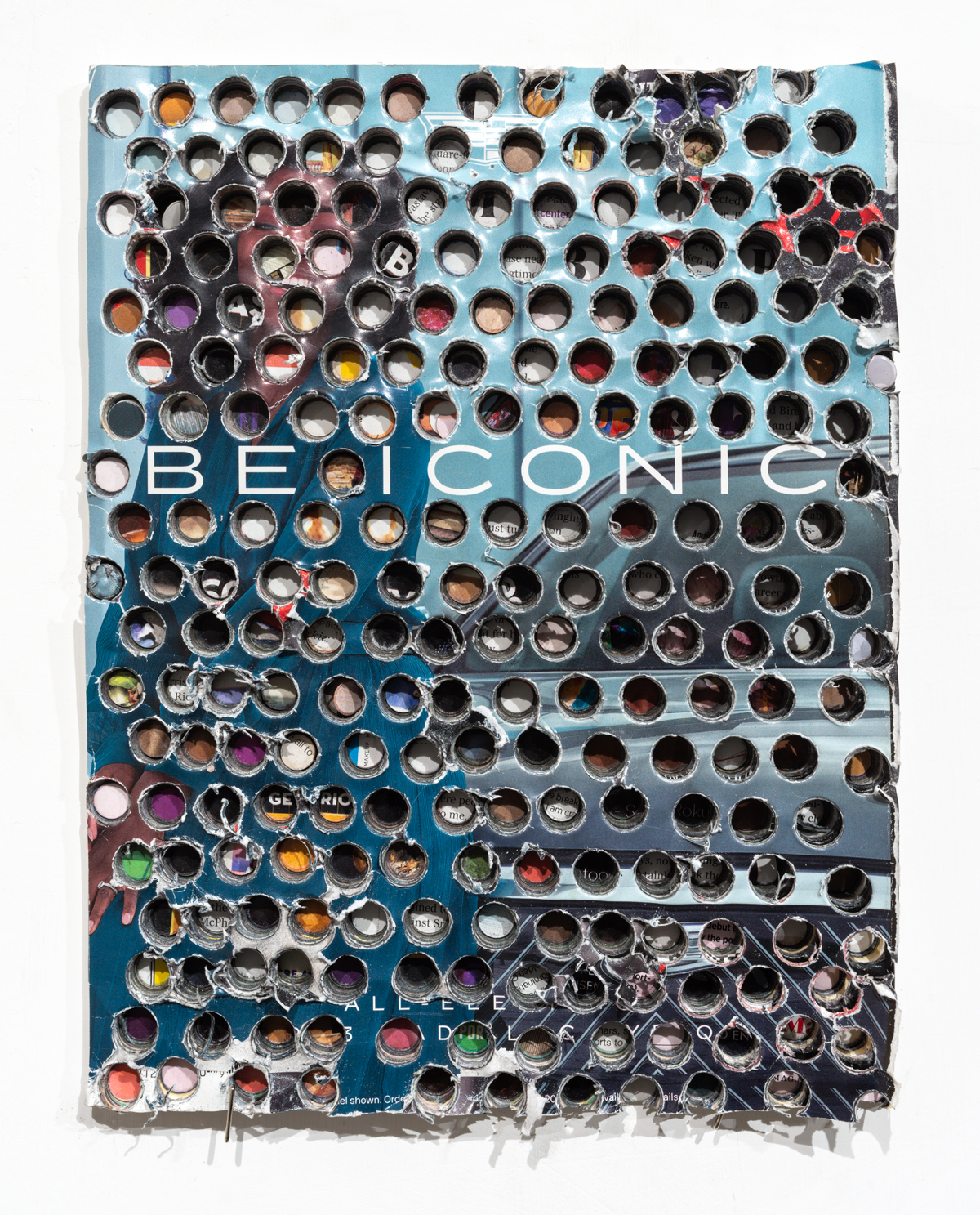 Be Iconic – 8.5×11 -Vogue magazine
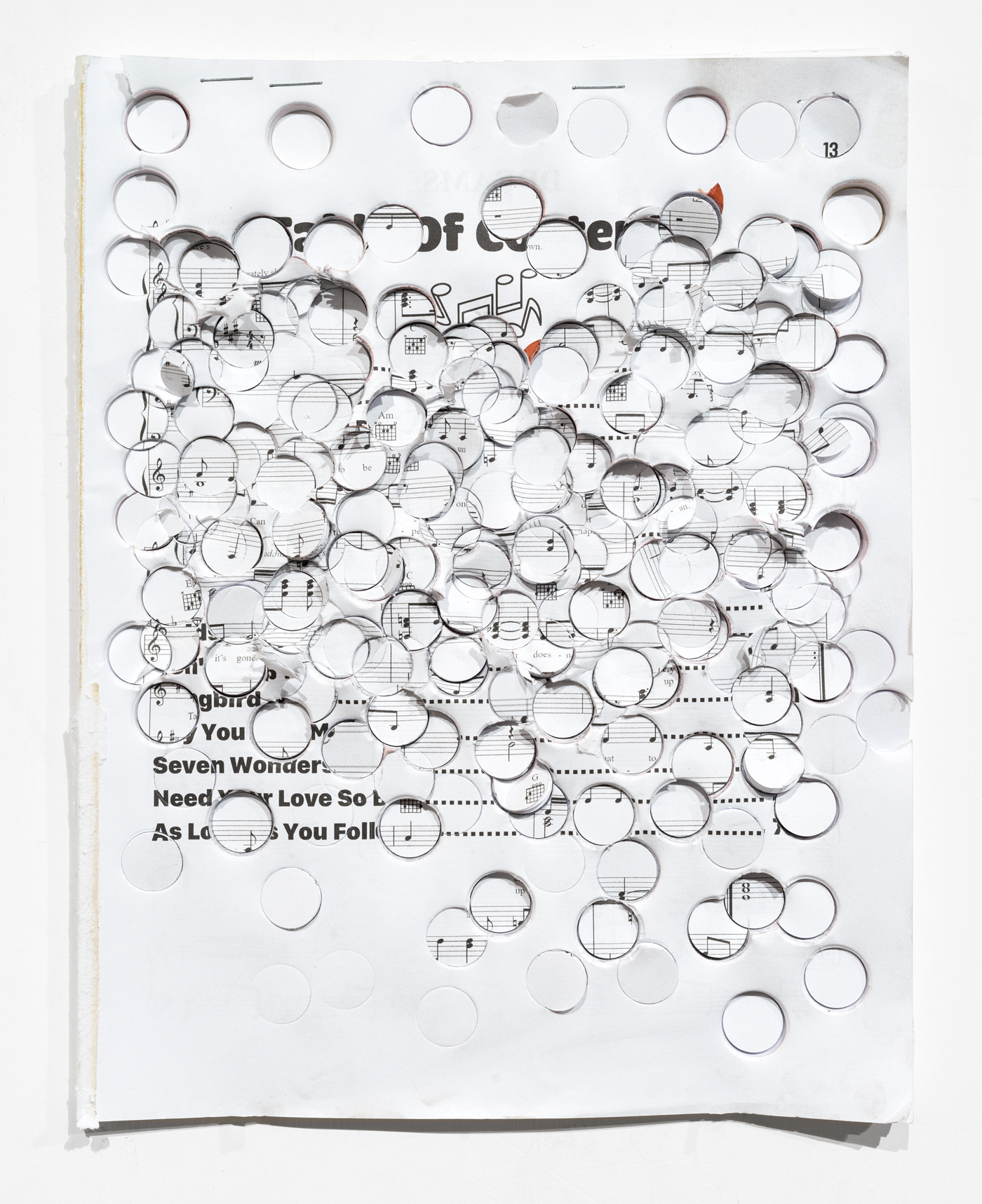 I Just want It To Feel Like A Fleetwood Mac Song – 8.5×11 – Fleetwood Mac song book
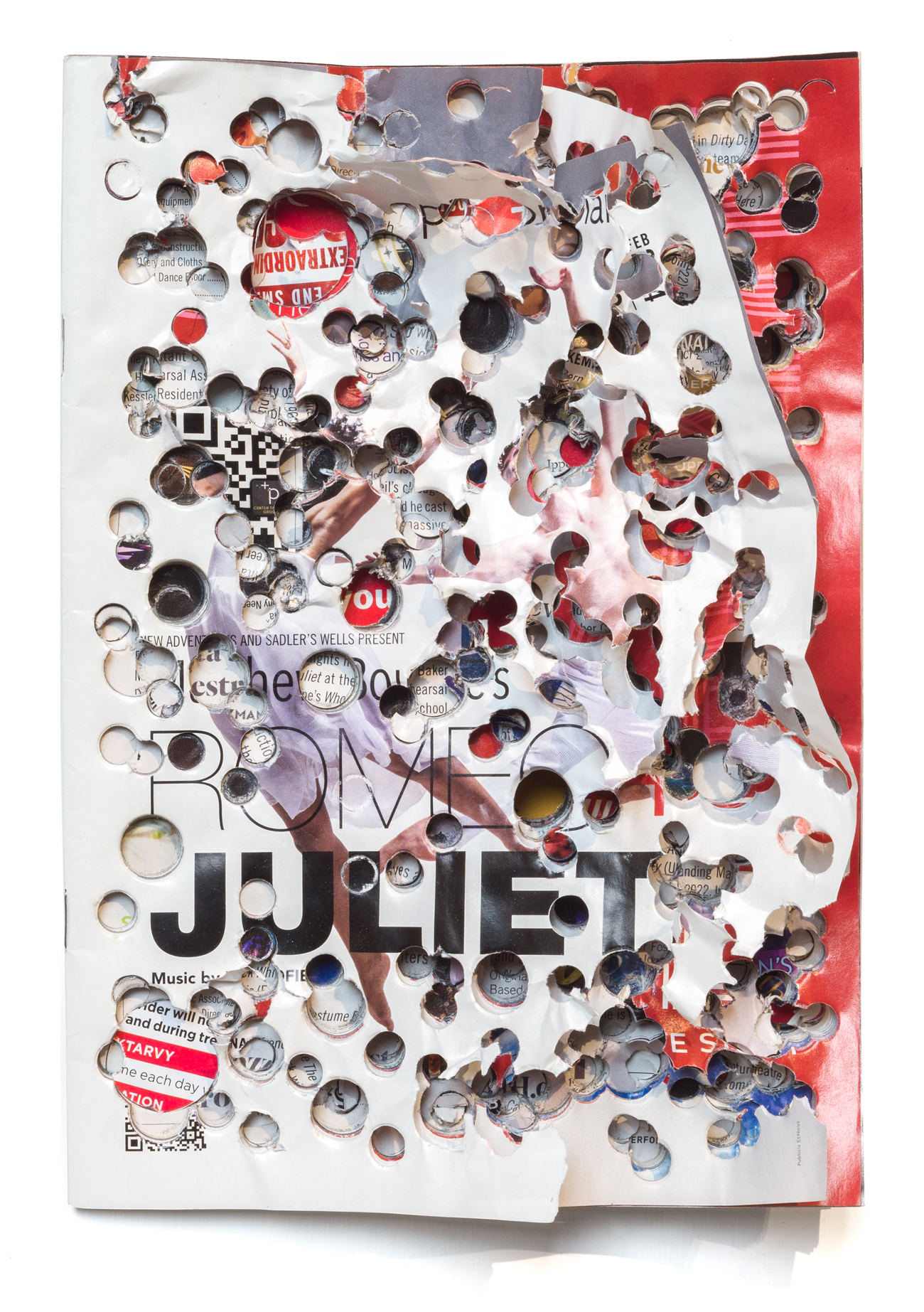 Juliet – 8.5×11 -Romeo and Juliet dance program
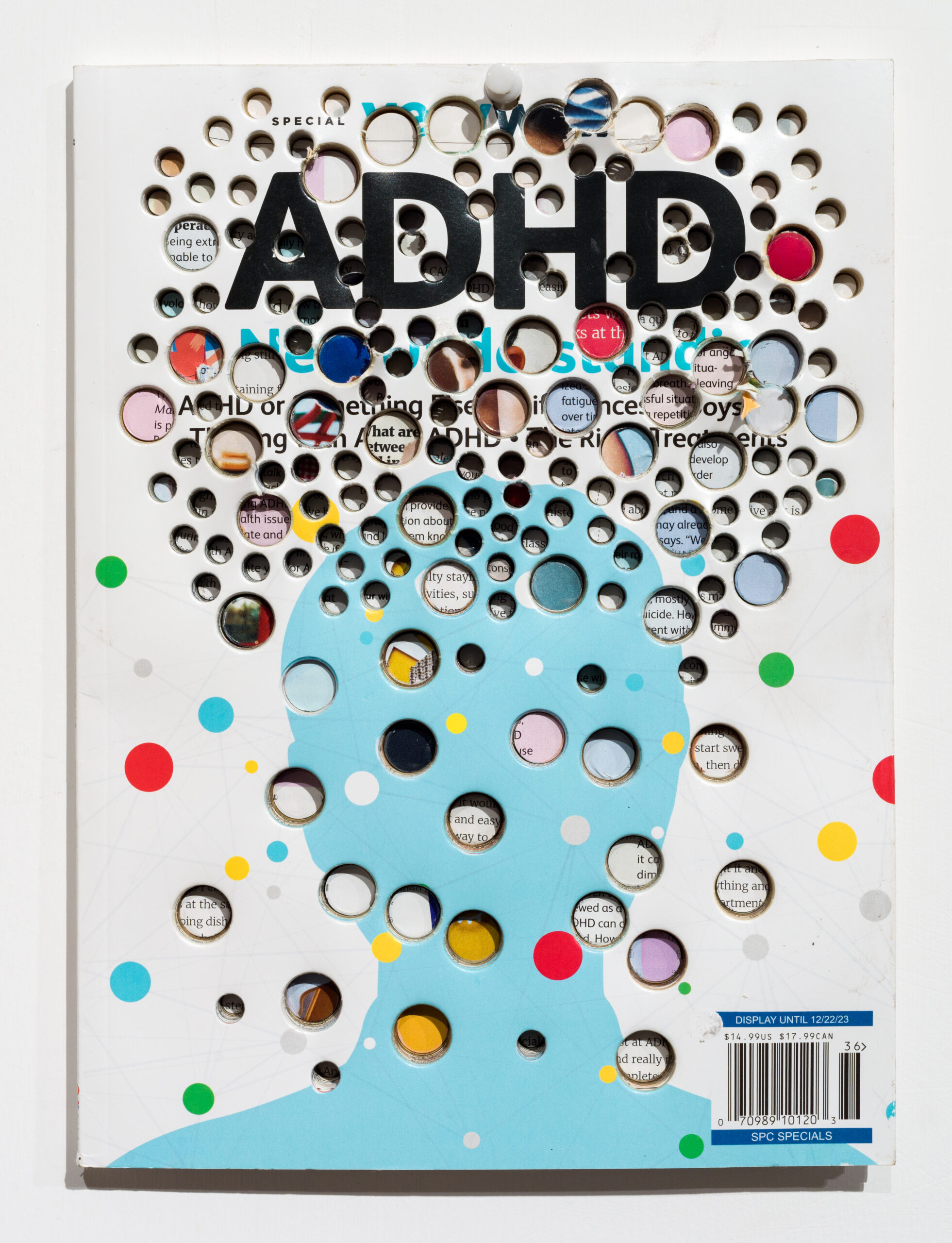 ADHD – 8.5″x11″ Be Well Magazine
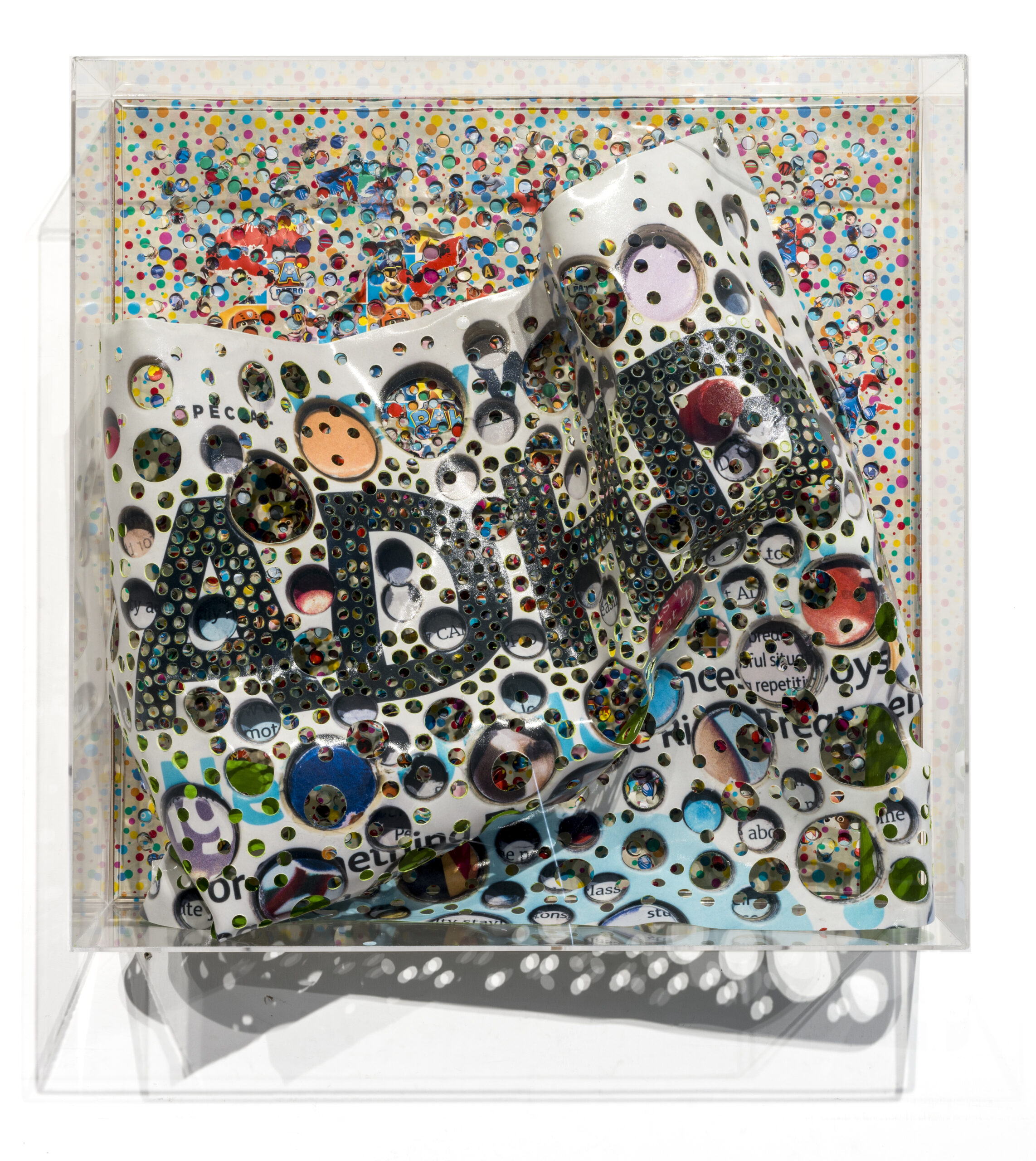 ADHD BOXED – 30″x30″x15″ -Archival photo on fabric with UV varnish, assorted gift wrapping paper, acrylic cube
Artist Statement — David Daigle | The Death of Beauty
We live inside a single face. Retouching, filters, Photoshop, injectables, and surgery have collapsed difference into a frictionless mask—a beauty calibrated by algorithms and sold as normalcy. Beauty has long operated as a language of power—polished, legible, centralized. In The Death of Beauty, I mourn that loss of plurality, then intervene by perforating language until it fractures.
I work with technical images—printed matter, magazines, books, photographs—images engineered to convince: a wallpaper mural of Botticelli’s Venus, glossy fashion editorials, celebrity portraits, city panoramas, and art criticism magazines. Commercial imagery, text, Arabic script, fashion photography, and wrapping papers are layered in strata, insisting that beauty is never singular or innocent—it is assembled, translated, and enforced. My materials carry commerce, gender, class, and geopolitics in their ink.
I submit them to an exacting physical uncertainty: thousands of holes hand-drilled over weeks of repetitive labor, each surface subjected to cumulative erosion. What advertising and spectacle build through saturation, I unbuild through endurance. I expose their design and scaffolding, turning icons into sediments. Each perforation is both wound and lens, reintroducing breath where perfection has sealed the surface. When I puncture an art magazine, I puncture an economy of taste; when I core a portrait, I excavate the architecture of spectacle; when I erode a skyline, I measure what culture overlooks.
Across the exhibition, the holes remain unstable in meaning: pixels and core samples, seeds and wounds, traces of gunfire and bombardment, disfigurements and apertures in the perfected body. They act as subversive destruction, refusing the cosmetic logic of a homogenized present. Yet they are also openings through which sublimation occurs, allowing new forms of seeing and relation to emerge.
In Gaza City, metaphor gives way to evidence. The perforations map violence—gunfire, shrapnel, the geometry of bombardment. A bucolic panorama is scarred until it reveals fractured Arabic text about peace in the Middle East, carrying the airlessness the city endures: pocked like concrete after an airstrike, edges curling like peeled plaster, a horizon struggling to hold. Here, the death of beauty is inseparable from the death of culture, environment, and biospheres. When buildings collapse, archives collapse—books, songs, recipes, dialects, gestures. The work becomes a wounded membrane where light passes through what was information.
In Iceberg, the holes function as core samples from a collapsing floe. Each opening reveals strata of automotive imagery—cars, chrome, speedometers, petroleum products. From a distance the surface appears glacial; up close it reveals a geology of destruction and promise from the fossil-fuel economy. I expose how the dream of the open road is refined from carbon and borrowed futures. The perforations turn the iceberg into particulate matter—pixels, dust, microplastics—echoing how the fossil-fuel economy fractures habitats, seasons, and species.
Throughout these works, beauty is not banished; it is contingent—dependent on what lies beneath and what we choose to overlook to keep it intact. The death named here is not of beauty itself but of its standardization: the template that renders us alike while erasing cultures and difference. By opening images through fractured surfaces, I restore contingency—scars, accidents, plural readings. If beauty is to remain alive, it must exceed the filter that defines it.